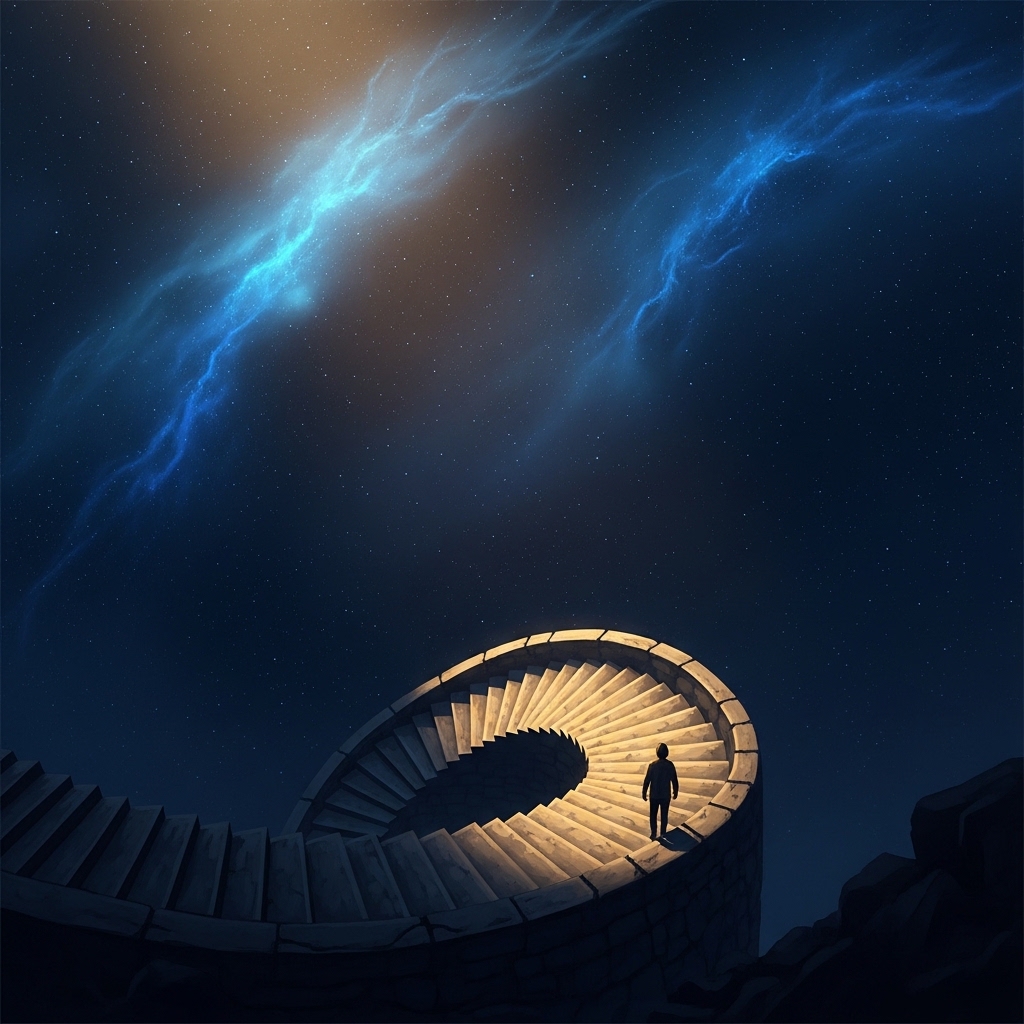
The poem at the heart of this book is eight stanzas long and was written by John of the Cross during or shortly after his nine months of imprisonment in Toledo. The prose commentary, which is the text known as The Dark Night of the Soul, was written several years later in response to requests from Carmelite nuns who had asked him to explain what the poem meant.
The poem describes a soul slipping out of a sleeping house in the dark of night, guided only by the fire burning in its own heart, to meet the beloved on a hillside. The commentary unpacks this image into a systematic map of the contemplative path. There are two darknesses: the active night of the senses, in which the soul deliberately renounces sensory consolations, and the passive night of the spirit, in which God himself removes from the soul every spiritual support including faith and hope as feelings, leaving only the bare orientation of love.
The phrase dark night of the soul has entered ordinary language to mean any period of depression or spiritual crisis. John means something more technical. The dark night is the contemplative event in which God strips the soul of its dependence on its own experience of God. Felt presence is taken away. Consolations cease. The soul’s confidence in its own progress collapses. What looks like loss is in fact the deepest purification. God is closer than ever, but in a mode the soul cannot register.
Lewis’s 1864 translation is the first complete English version. His prose can feel Victorian and dense at times. It remains the standard PD edition.
Book one — Of the night of sense
Chapter one
On a dark night, Inflamed with love-longings, Oh, happy chance! I went forth without being observed, My house being now at rest; In darkness and in safety, By the secret ladder, disguised, Oh, happy chance! In darkness and in concealment, My house being now at rest.
Chapter two
The soul, before it can be united to God, must be wholly set free from all attachment, however slight, that it may be wholly His. The soul is not lacking in anything if it be wanting in detachment. The whole work consists in this.
[ A representative passage. The dark night unfolds across two books, the first treating the night of the senses, the second the night of the spirit. The complete Lewis edition is at the source linked above. ]