The two knowledges
I.1.4
Two kinds of knowledge are to be known. So those who know Brahman declare. The higher and the lower.
I.1.5
The lower knowledge is the Rig-veda, the Yajur-veda, the Sama-veda, the Atharva-veda, phonetics, ritual, grammar, etymology, metre, astronomy. The higher knowledge is that by which the Imperishable is apprehended.
The Imperishable
I.1.6
That which cannot be seen, cannot be grasped, has no family and no caste, no eyes and ears, no hands or feet, the eternal, all-pervading, infinitely small, that Imperishable, is what the wise regard as the source of all beings.
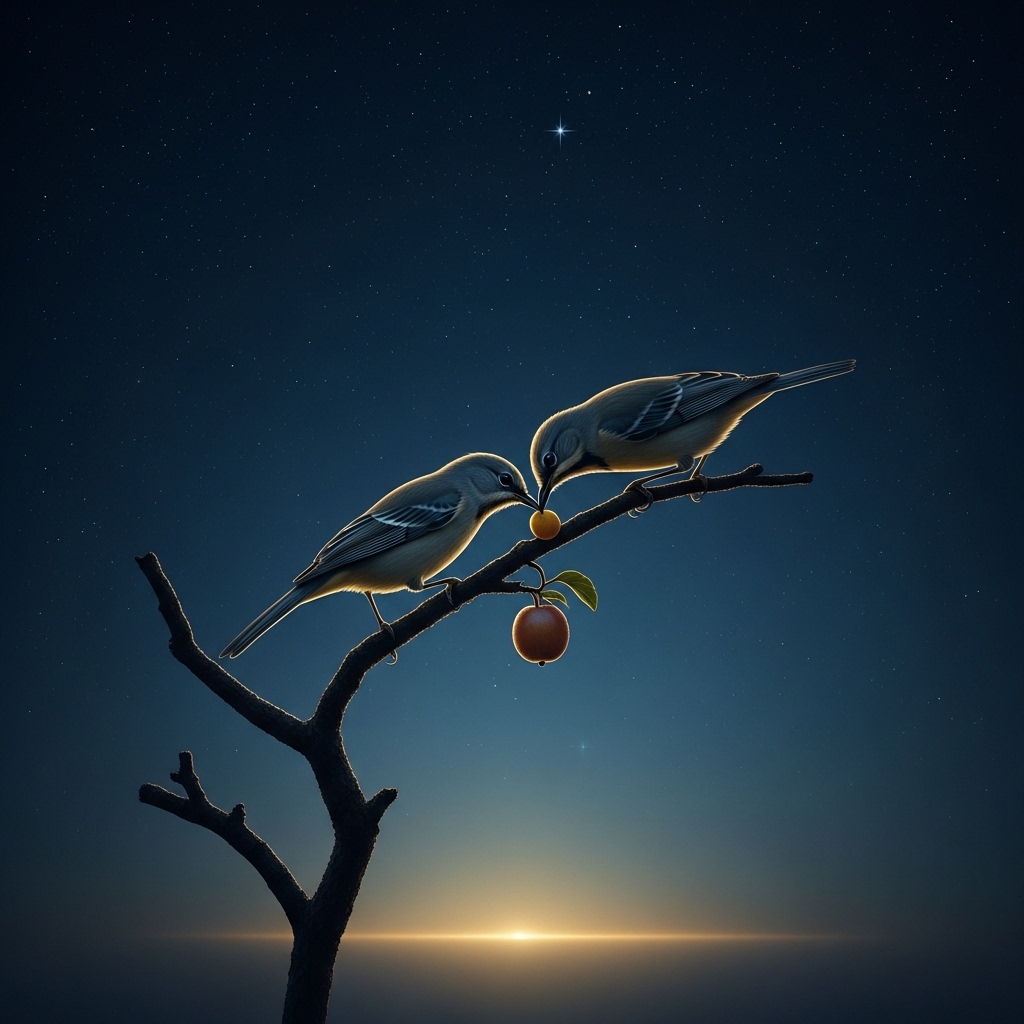
The two birds
III.1.1
Two birds, inseparable companions, perch on the same tree. The one eats the sweet fruit, the other looks on without eating.
III.1.2
On the same tree, a man, drowning, is grieved by his powerlessness. But when he sees the other Lord contented and knows his glory, then his grief passes away.
III.1.3
When the seer beholds the Maker, the lord, the Person whose source is Brahman, then, knowing, he shakes off good and evil, becomes stainless, and reaches the highest oneness.
The seal
III.2.9
He who knows that highest Brahman becomes Brahman himself. In his family no one is born ignorant of Brahman. He overcomes grief, he overcomes evil, he becomes immortal, free from the bonds of the heart.
III.2.11
This is the truth that has been told. There are no riddles for him who knows it. Who knows it, he is freed.