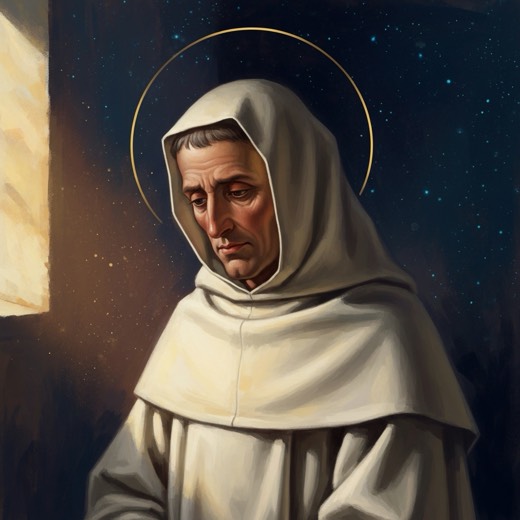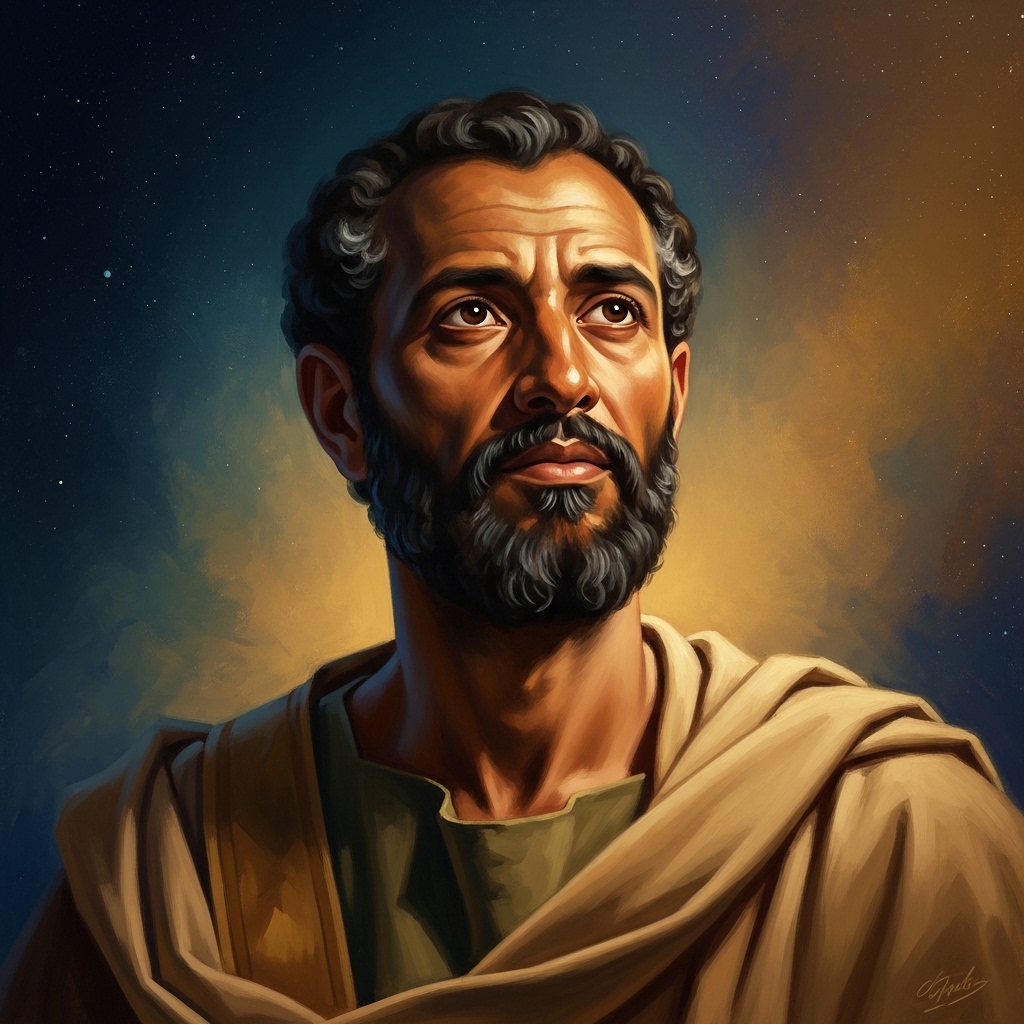
Augustine is where the Christian contemplative interior begins. Born in Roman North Africa, educated as a rhetorician, he spent the first thirty years of his life chasing pleasure, philosophy, and various spiritual schools, before a long and tortured conversion brought him to the Christian church in 386. He spent the rest of his life as Bishop of Hippo, writing on grace, the Trinity, the City of God, and the workings of the human soul.
His decisive contribution to mysticism is the Confessions. Written as a long prayer addressed directly to God, it is the first sustained psychological self-examination in Western literature. The famous opening line sets the entire program: You have made us for yourself, and our heart is restless until it rests in you. The book traces the movement of his own soul from dispersion in the world toward a single still point of recognition.
Augustine’s mysticism is interior and personal. He locates the divine not above or beyond but deeper within: Late have I loved you, beauty so old and so new, late have I loved you. You were within me, and I was outside. This formulation, that what is sought is the interiority of the seeker, runs through every subsequent stream of Christian contemplation.
His influence on later mystics is total. Bernard read him. Eckhart cited him. Teresa of Avila said the Confessions was the book that broke her open. The contemplative tradition in the West is in many ways a long footnote to Augustine.
The teaching
The contemplative heart of the Confessions is the scene at Ostia in Book IX. A few days before his mother Monica died, the two of them stood leaning at a window that looked onto a garden, talking about what the life of the saints might be. Augustine describes how the conversation itself became an ascent. They moved in thought through the bodily world, through the heavens, through the mind itself, and for one instant touched the eternal Wisdom toward which all of it points. Then they sighed and returned to the sound of their own voices.
Two features of the account shaped everything that came after it. The ascent happens through interiority, by passing inward and upward through the levels of the soul, and this became the basic geography of Western contemplation. And it happened in the middle of an ordinary conversation between a tired bishop-to-be and his dying mother, with no technique, no trance, no special setting. Augustine’s question afterwards, what it would be if that moment continued and every other thing fell silent, is among the earliest Christian descriptions of contemplative silence as the soul’s destination.
Where to start
- Confessions: hosted here in the Pusey translation; Books I, VIII, and IX carry the heart of the story.
- Augustine at CCEL: the wider catalogue in English, including the expositions on the Psalms and On the Trinity.
- Confessions at Project Gutenberg: the same Pusey translation as a free ebook for offline reading.