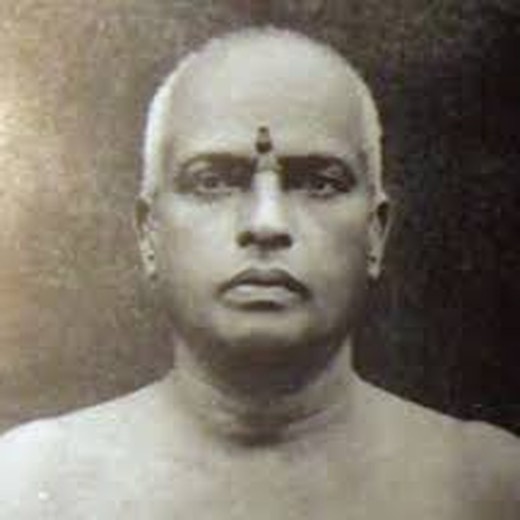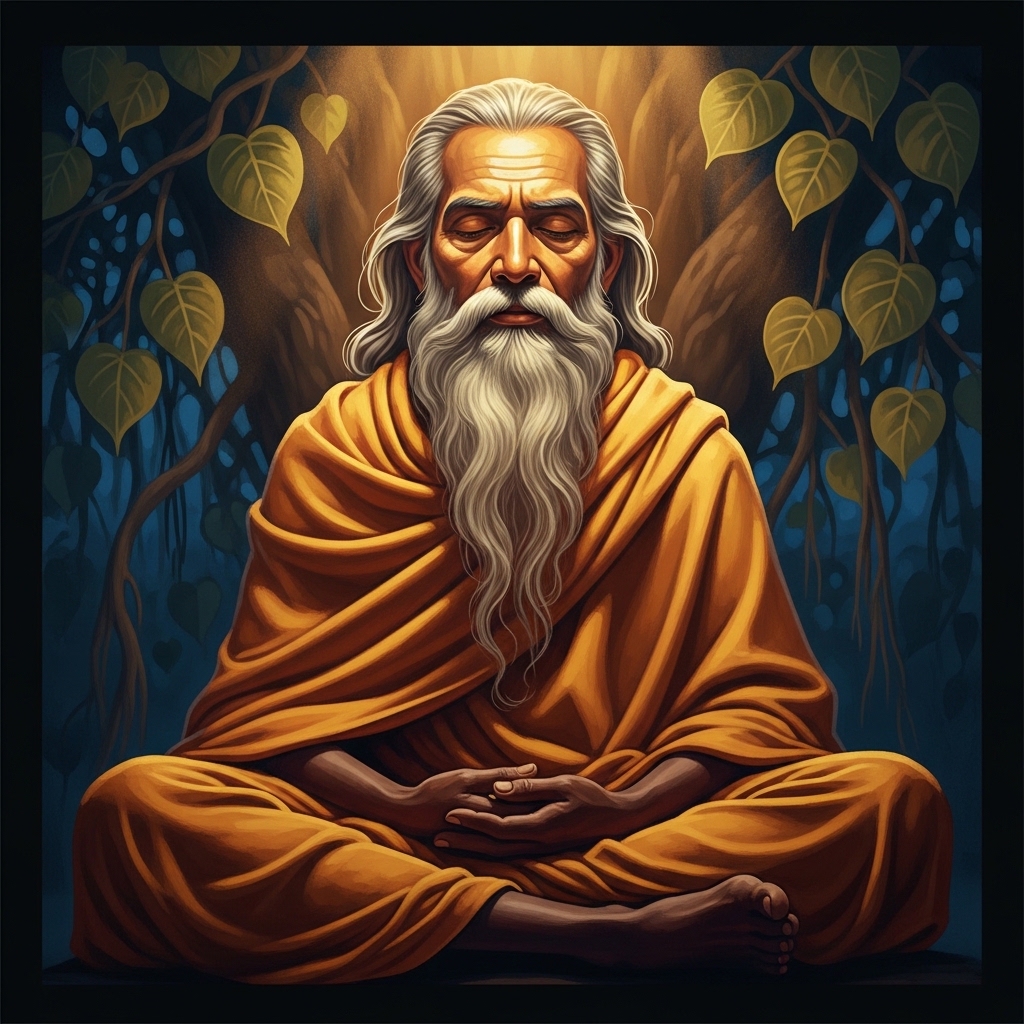
Gaudapada is the bridge figure of Advaita. Tradition makes him the teacher of Govinda, who was the teacher of Shankara, so the lineage runs Gaudapada → Govinda → Shankara without intermediary. Beyond that, almost nothing about his life is known. His name points to the Gauda region of Bengal, scholars place him somewhere between the sixth and eighth centuries, and the rest is legend. He survives as a voice in a single text.
That text is the Mandukya Karika, the verse treatise that turned the Mandukya Upanishad from one Upanishad among many into the foundational text of Advaita. The Upanishad itself is twelve verses on the syllable Om and the three states of waking, dream, and deep sleep, with turiya, the fourth, as their ground. The Karika takes those twelve verses and follows them all the way down, in four chapters that move from exposition through argument to the quieting of argument itself.
The teaching
The Karika is known for ajativada, the doctrine of non-origination: the claim that nothing has ever actually come into being, and that what appears as a world arising is consciousness appearing to itself.
The argument starts with dreams. Objects in a dream are experienced as fully real while the dream lasts. They occupy space, they provoke fear and desire, and only waking exposes them as appearance. Gaudapada points out that waking objects hold a similar status. They too are known only in the experiencing of them, and nothing outside experience ever vouches for them. He then turns to the old image of the rope mistaken for a snake in poor light. The snake is seen and fled from, yet no snake ever came into existence, and when the rope is recognised nothing real is destroyed. For Gaudapada the birth of the world has the standing of that snake. The Self is never actually modified into a world, so there is nothing to be undone, only a misreading to be seen through.
The final chapter offers the image of the firebrand. A burning stick whirled in the dark appears to draw circles and arcs, though nothing is there except a single point of light in motion. Consciousness in movement traces a world of subjects and objects in the same way. Shankara wrote a full commentary on the Karika, and through him its verses passed into the permanent vocabulary of the tradition.
Where to start
- The Mandukya Upanishad: the twelve verses everything else rests on. Read it first; it takes ten minutes.
- The Mandukya Karika: Gaudapada’s four chapters, the earliest surviving systematic statement of Advaita.
- Swami Nikhilananda’s translation: the Upanishad, the Karika, and Shankara’s commentary together, free in the public domain at the Internet Archive.
- Advaita Vedanta: the tradition page, for the wider lineage Gaudapada stands at the head of.