A theme through the library

The Witness

The pointing to that in which all experience arises but which is itself never an object of experience. The Atma Bodha, the Ashtavakra Gita, the Direct Path investigations.

You are the witness only. You have nothing to do with the doer.

Ashtavakra Gita

The witness is the contemplative pointer to that in which all experience arises but which is itself never an object of experience. Whatever is observed, there is that which observes. Whatever changes, there is the unchanging in which change appears. The Sanskrit word is sakshi, the seer, the one who sees the seen.

The Atma Bodha and the Aparokshanubhuti work the recognition systematically. The body is not the Atman, because the Atman witnesses the body. The senses are not the Atman, because the Atman witnesses the senses. The mind is not the Atman, because the Atman witnesses the mind. Thoughts arise and pass; the witness does not arise or pass. The Ashtavakra Gita gives the same teaching in a more uncompromising voice: you are the witness only. You have nothing to do with the doer.

The Direct Path teachers (Atmananda Krishna Menon, Jean Klein, Greg Goode, Francis Lucille) take the inquiry further. They ask the practitioner to investigate, by patient experiment, whether the witness is itself an object. Look for the seer, they say, and notice that you cannot find it. The witness is not an object, it is what is doing the looking. And what is doing the looking is what one is.

The recognition that finally lands is that the witness and what is witnessed are not two. There is no separated observer behind the eyes; there is only awareness, and the apparent objects are arisings within it. The seer and the seen are the same Self. This is the conclusion of the inquiry: not the witness as a separate refuge, but the witness as a doorway through which the apparent two-ness dissolves.

Texts that work this thread

The library

Advaita Vedanta

Mandukya Upanishad

The shortest of the principal upanishads at twelve mantras, and the seed of the entire Advaita lineage. Through the analysis of waking, dream, deep sleep, and the fourth state, it points beyond every state to the witness in which all states arise.

Advaita Vedanta

Isha Upanishad

One of the shortest and most luminous of the principal upanishads. Eighteen verses opening with the line that has shaped the contemplative imagination of two millennia, that all this, whatever moves on the earth, is enveloped by the Lord.

Buddhist Nonduality

The Diamond Sutra

A dialogue between the Buddha and the elder disciple Subhuti on the nature of perception, identity, and the bodhisattva path. The Diamond Sutra is among the oldest dated printed books in human history (a 868 CE Chinese woodblock copy survives in the British Library) and remains one of the central texts of Chan and Zen.

Advaita Vedanta

Katha Upanishad

The boy Nachiketa is sent by his father to Yama, the lord of death. He waits three days at Yama's gate without food or drink.

Buddhist Nonduality

The Lankavatara Sutra

A foundational Yogacara sutra cast as the Buddha's teaching to the king of Lanka, addressing the nondual nature of mind, the eight consciousnesses, and the doctrine of mind-only. Especially important to the early Chan tradition, which knew itself for a time as the Lankavatara school.

Advaita Vedanta

Mundaka Upanishad

A short upanishad in three chapters, named for the shaved head of the renunciate. It contains the teaching of the two knowledges (the higher and the lower) and the famous parable of the two birds on a single tree, one eating its sweet fruit, the other looking on without eating.

Advaita Vedanta

Mandukya Karika

The Mandukya Karika is the bridge between the Upanishads and Shankara's systematic Advaita. In four prakaranas Gaudapada develops the doctrine of ajativada, non-origination, and turns the twelve mantras of the Mandukya Upanishad into the foundational treatise of nondual recognition.

Advaita Vedanta

Brahma Sutras

The third foundational text of Vedanta, after the Upanishads and the Bhagavad Gita. Badarayana's terse aphorisms, perhaps four words each, condense the Upanishadic teaching into a system.

Advaita Vedanta

Vivekachudamani

Shankara's most famous prakarana grantha. A systematic teaching on viveka — the discrimination between the real and the apparent — set as a dialogue between teacher and student.

Advaita Vedanta

Atma Bodha

Shankara's compact exposition of nondual recognition. Sixty-eight verses summarising the entire path of self-knowledge.

Advaita Vedanta

Aparokshanubhuti

A short Shankara work focused on direct rather than mediated knowledge. Where other Vedantic texts approach realisation through inference and analysis, Aparokshanubhuti points to the immediate perception of the Self that is the actual condition for any knowing whatsoever.

Advaita Vedanta

Yoga Vasistha

A vast work of stories, dialogues, and direct teaching on the nature of consciousness and the dreamlike quality of the apparent world. Vasistha instructs the young prince Rama on the path of self-knowledge, weaving philosophy and parable into one of the longest spiritual texts in any tradition.

Advaita Vedanta

Ashtavakra Gita

The Ashtavakra Gita is among the most uncompromising texts in the Advaita tradition. King Janaka asks how liberation is attained, and the sage Ashtavakra answers with verses that leave no foothold for the seeker to stand on.

Advaita Vedanta

Avadhuta Gita

The song of the avadhuta, the one beyond all categories. Pure recognition without instruction.

Advaita Vedanta

Tripura Rahasya

One of the texts Ramana Maharshi recommended most often. The story of Hemachuda's awakening, told as a sustained dialogue between Parashurama and Dattatreya, mapping the territory between Tantric Shaivism and Advaita Vedanta.

On video

Talks on this thread

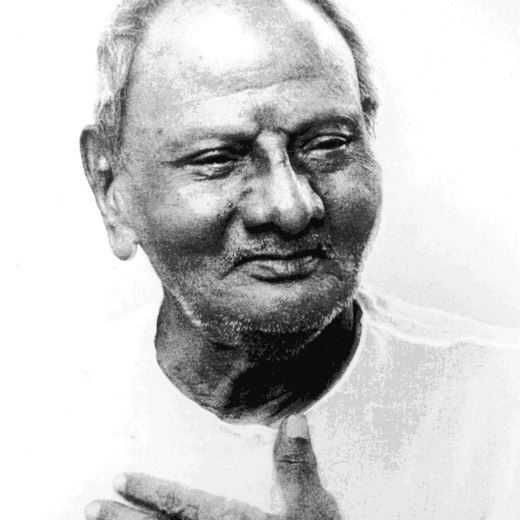
From self to Self Nisargadatta Maharaj
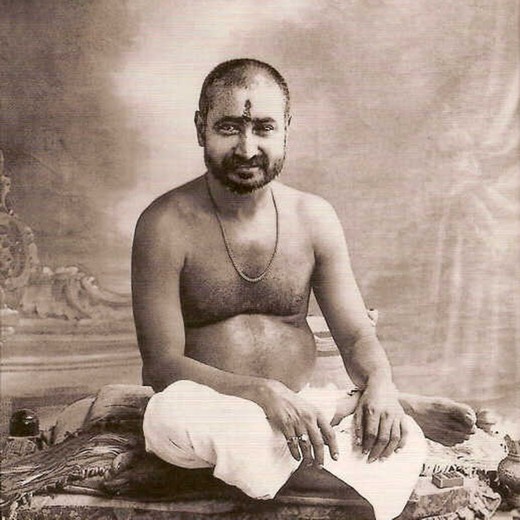
Siddharameshwar Maharaj A short reflection on the Sadguru of the Inchagiri Sampradaya
The Perfect Spiritual Guide to Enlightenment Ashtavakra Gita