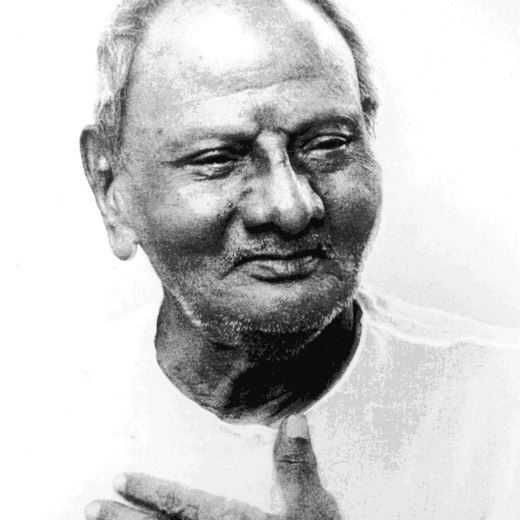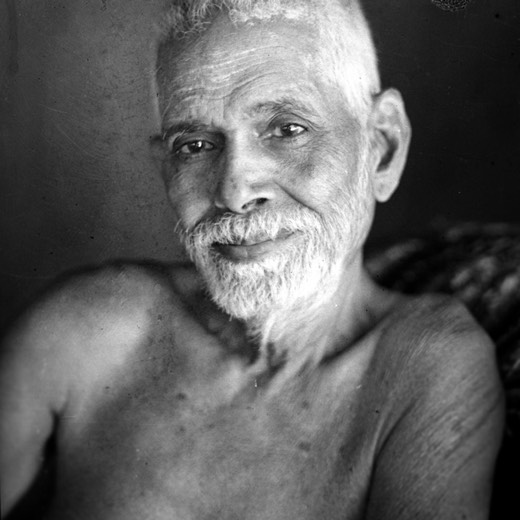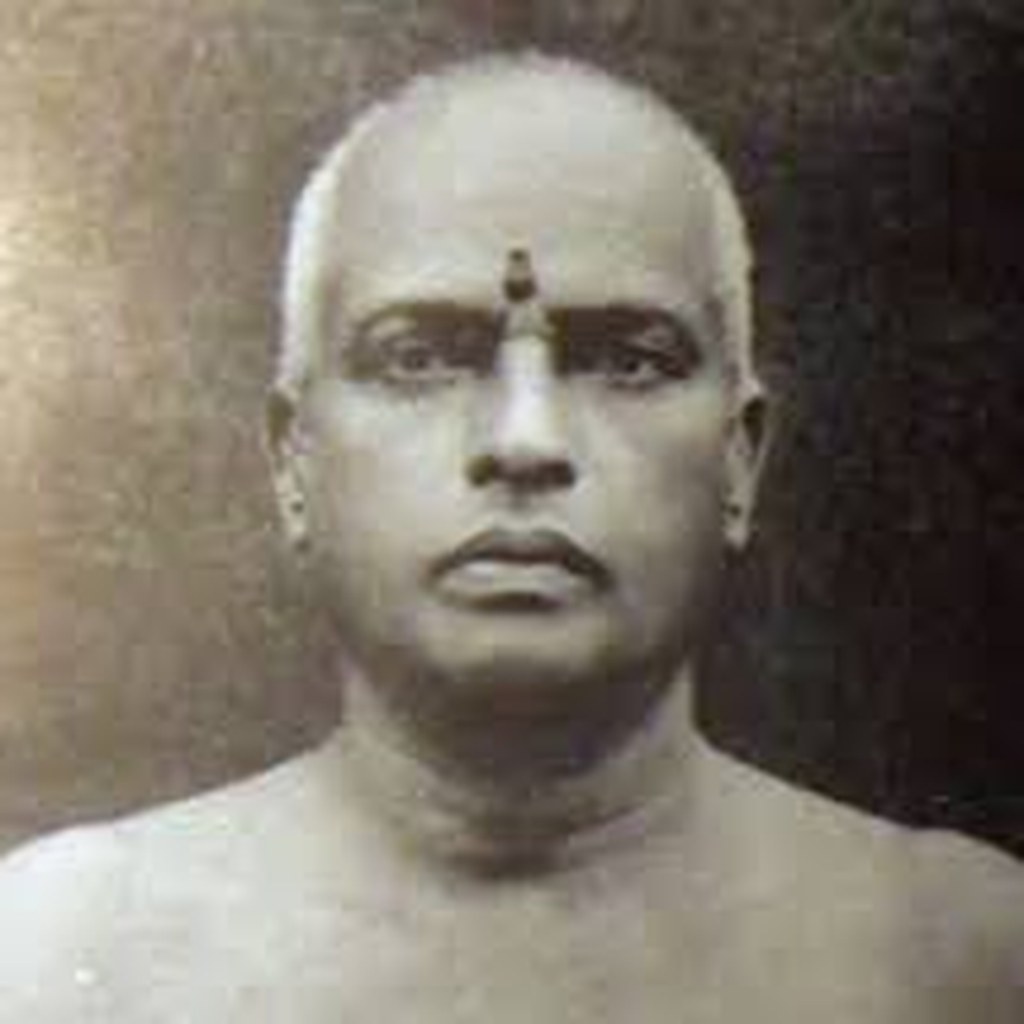
Atmananda Krishna Menon was born in Travancore (now Kerala) in 1883 and spent most of his working life as a police officer, eventually retiring as superintendent. He met his teacher Yogananda Swami in 1919, and after years of practice and teaching he gathered a small circle of Indian and Western students who came to study with him at his home in Trivandrum. He remained a householder throughout, holding his government post, raising a family, and teaching in the evenings, which shaped a teaching designed to be carried out in the middle of an ordinary life. He died in Trivandrum in 1959.
His written output was small. Two short books of verse, Atma Darshan and Atma Nirvriti, hold the core teaching in compressed form, and the record of his evening talks from 1950 to 1959, taken down by his disciple Nitya Tripta, fills out the detail. Among the Western students who sat with him was Jean Klein, and through Klein’s own students the approach spread under the name it now carries, the Direct Path.
The teaching
His distinctive contribution is the method of higher reason. Where most Advaita pointing relies on direct intuition or on devotional surrender, Atmananda used reasoned investigation as the practice itself. Ordinary reason works among objects, comparing one thing with another. Higher reason turns the same faculty around and examines experience itself, and it keeps going until the examining dissolves into the awareness that was doing it.
The signature exercise is the analysis of seeing. We say, I see a chair. Atmananda has the student slow this down and check it. What is actually present in the seeing of a chair is form and colour. Search the experience for a chair that exists apart from that seen form and none can be found; the object never appears anywhere except as the seeing of it. Then the seeing itself is examined. Seeing is never found apart from the knowing of it, so the form resolves into seeing, and the seeing resolves into consciousness. The same analysis is run on hearing, on touch, on the body, and on thought. Each time the apparent object hands its reality back to the awareness it appeared in. Repeated sincerely, the exercise undoes the assumption of a world standing apart from consciousness, using nothing more exotic than careful attention.
Where to start
- Atma Darshan and Atma Nirvriti: his two short verse texts, terse and meant for slow reading. Most students of this path return to them for years.
- Notes on Spiritual Discourses of Shri Atmananda: Nitya Tripta’s record of the talks from 1950 to 1959, arranged by subject and freely available as a PDF.
- Greg Goode’s site: the clearest contemporary presentation of the Direct Path that descends from Atmananda through Jean Klein and Francis Lucille.
- The Direct Path teachers: Greg Goode’s page on this site walks through the method as it is taught now.