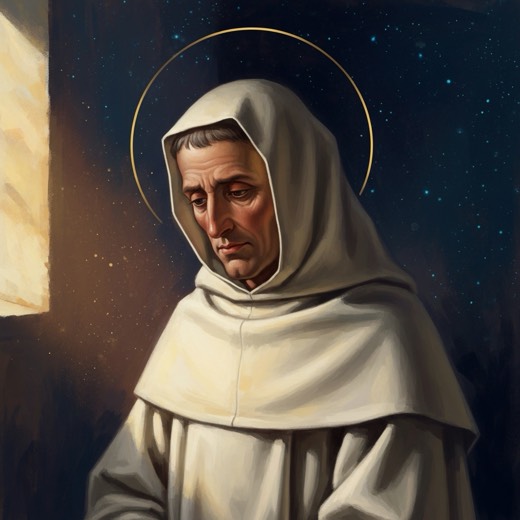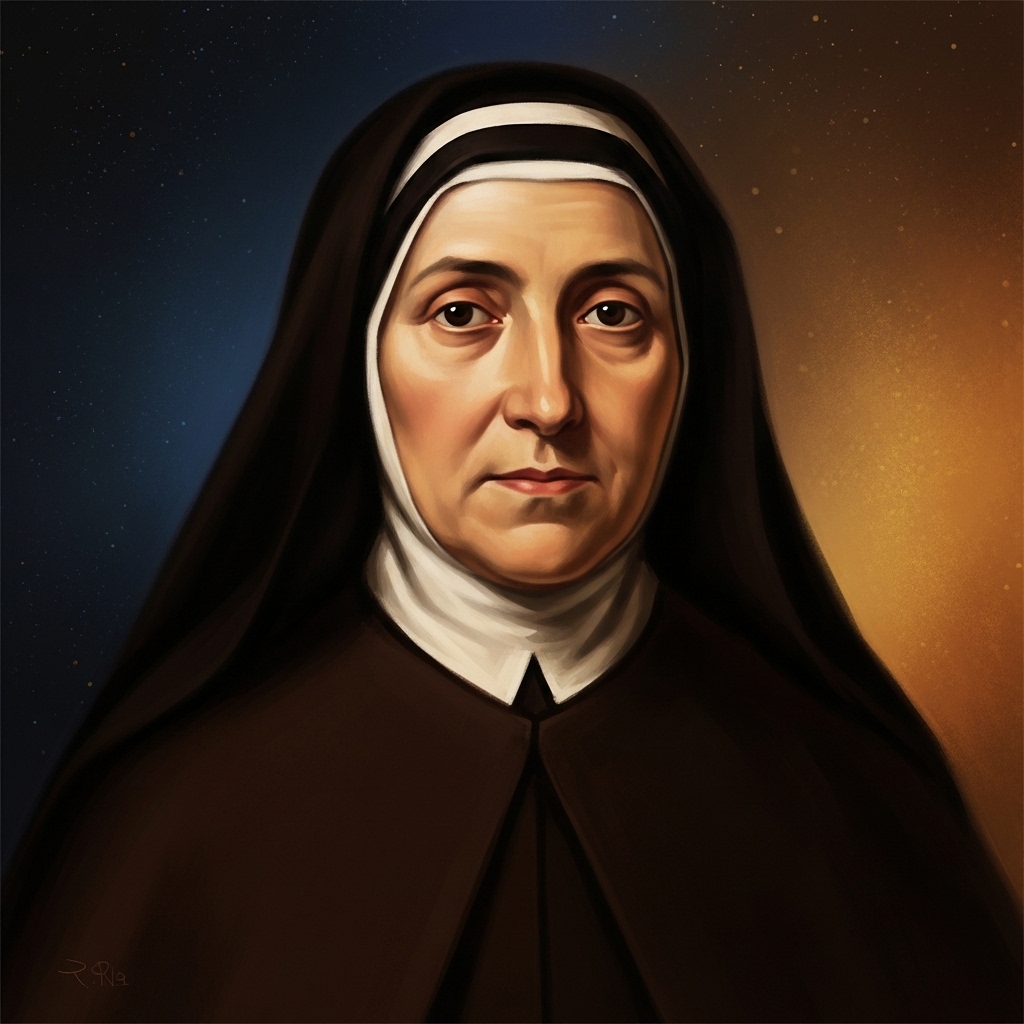
Teresa of Avila is the most practically gifted teacher in the Christian contemplative tradition. Born to a Castilian family of converso heritage, she entered the Carmelite convent of the Incarnation in Avila at twenty, spent twenty years in conventional religious life, and at forty experienced a sudden contemplative opening that reorganised her entire path. The remaining twenty-seven years of her life were a sustained burst of activity: founding seventeen reformed convents, dictating a series of major books, and arguing in writing with the Inquisition, with her Carmelite superiors, and with confessors who could not keep up with what was happening in her prayer.
Her four major works, all written under direct ecclesiastical pressure, are the Autobiography, the Way of Perfection, the Foundations, and the Interior Castle. The Castle is the masterpiece: the soul mapped as a crystal castle of seven mansions, with the divine indwelling in the innermost chamber, and the contemplative path as the slow movement inward.
Teresa’s distinctive contribution is psychological precision. She describes specific contemplative states with the matter-of-factness of a botanist describing plant species: the prayer of recollection, the prayer of quiet, the orison of union, ecstasy, raptures, intellectual visions versus imaginative visions versus corporeal visions. She is candid about the dangers of self-deception and equally candid about her own mistakes. The result is a manual that has been read for four centuries by contemplatives in and outside the Christian tradition.
She and John of the Cross together founded the Discalced Carmelite reform, a partnership that produced two complementary masters: he the apophatic stripper, she the cartographer of states. She died on the road in 1582 while on yet another founding journey.
The teaching
The seven mansions fall into a clear sequence. The first three cover the work a person can do: entering the castle through prayer, growing in self-knowledge, bringing life into ethical order, persevering when practice turns dry. The fourth is the turning point. Here, in the prayer of quiet, something begins that effort cannot produce, and Teresa illustrates it with two ways of filling a basin: water carried in through aqueducts, which is prayer as labour, and water rising from a spring directly beneath, which is prayer received. The fifth mansion is union, brief and total. The sixth is the long betrothal, where raptures and visions arrive together with the heaviest interior trials. The seventh is the spiritual marriage, a stable and quiet union at the centre of the soul that no longer comes and goes.
Her closing observation is characteristic. In the seventh mansion, she writes, Martha and Mary work together. The person in stable union does not withdraw from the world; prayer and active service stop competing, and the test of depth in prayer is growth in love of neighbour.
Where to start
- The Interior Castle: hosted here in the Stanbrook translation.
- Way of Perfection: her handbook of prayer, written for her own nuns, at the Christian Classics Ethereal Library.
- Teresa at CCEL: the Autobiography and the rest of the catalogue in English.