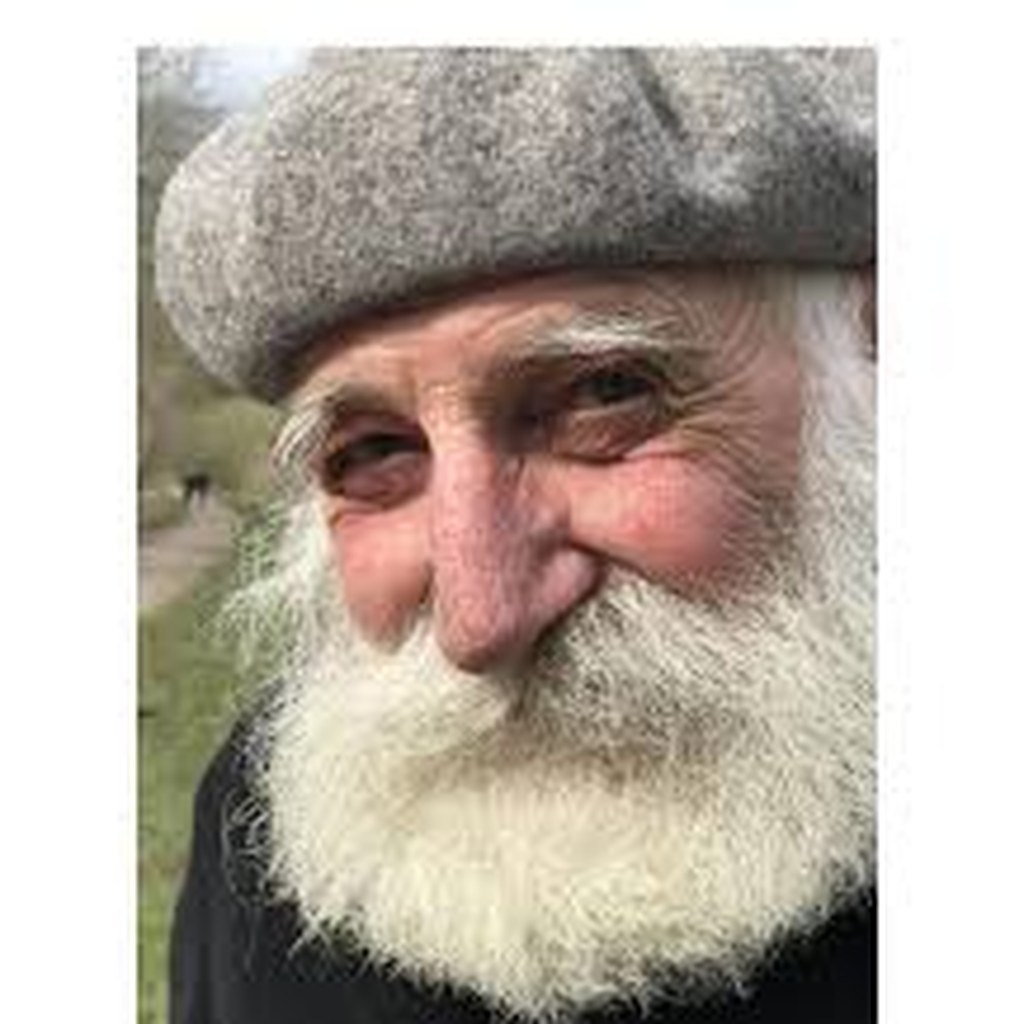
John Butler is an English farmer who has practised contemplative prayer most of his adult life. Born in Lincolnshire and educated at a Quaker school, he learned a simple mantra-based meditation through the School of Meditation in London as a young man and has sat with it, morning and evening, for some six decades. He was drawn to the Russian Orthodox tradition in his middle years, and farmed organically in Derbyshire and in Russia. His first book appeared in 2008, when he was seventy-one, and he came to a much wider audience in his eighties through long-form recorded conversations with Iain McNay on Conscious TV and through the Spiritual Unfoldment channel on YouTube, where his quiet talks from a Derbyshire church have drawn hundreds of thousands of subscribers.
His teaching is plain, direct, and entirely undecorated. He has nothing to sell, no method to license, no guru posture. He speaks of the practice of stillness, of the small daily turning of the heart toward God in the midst of ordinary work, of the long patience required for contemplative prayer to deepen, and of what he simply calls the Light. Readers of Eckhart and the Cloud of Unknowing will find themselves on familiar ground. His own influences are the Philokalia, the Russian Way of a Pilgrim, the Quaker silence, and the long farming years that taught him to wait.
An example of the teaching
His guidance on meditation is as unhurried as everything else about him. Sit upright, close the eyes, and let the body settle. Then let the attention sink beneath the activity of the mind, the way deep water lies quiet beneath a churned surface. He speaks of thoughts as ripples in the sea or clouds passing the sun: real enough, endlessly arriving, and no obstacle once attention stops chasing them. The practice is to return, gently and without self-criticism, every time the mind wanders off, and to let the settling go as deep as it wants to go. Practised with patience over months and years, the mind comes to rest in a silence that gradually opens into stillness, spaciousness, and an abiding sense of presence.
He anchors the whole of it in a single line of scripture, Be still, and know that I am God, and he reads the line literally. The stillness does the knowing. Effort, in his account, only takes you to the threshold; what matters most is the willingness to sit down again the next morning.
Where to start
- Wonders of Spiritual Unfoldment: a slim gathering of the heart of the teaching.
- Mystic Approaches: a longer collection of reflections on the contemplative life.
- The official site: books, audiobooks, retreats, and a contact page.
- Spiritual Unfoldment on YouTube: his own channel, with hundreds of recorded talks and meditations; the easiest way to meet his voice.