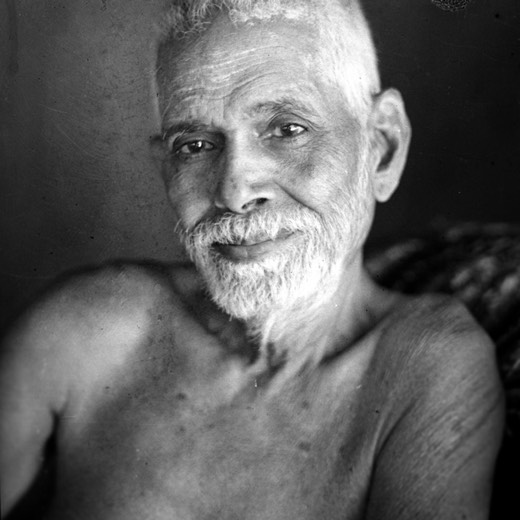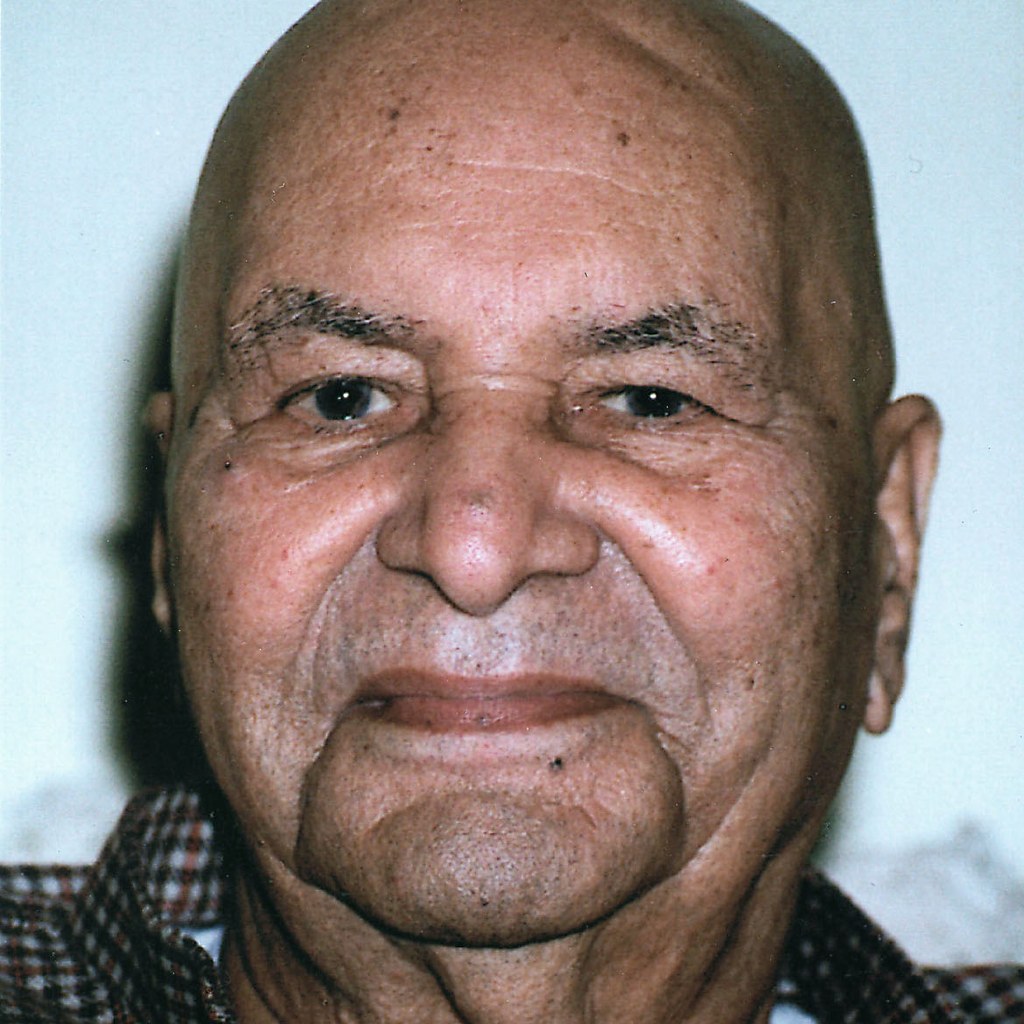
Hariwansh Lal Poonja was born in 1910 in what is now Pakistan. He served for a time as an officer in the British Indian army, married, raised a family, and worked for decades in mining and engineering in southern India. Through all of it he carried a deep devotional pull and an early experience of God-presence that he could not satisfy through worship alone. In 1944, on the recommendation of a wandering sadhu, he visited Ramana Maharshi at Tiruvannamalai. Ramana looked at him in silence, and the looking ended his seeking. He returned many times in the years that followed.
After Ramana’s death in 1950 Papaji continued to work and to travel, living a quiet outwardly conventional life. Only in retirement, in Hardwar and then Lucknow, did he begin to receive students openly. Through the 1980s a thin stream of Westerners found their way to him. By the early 1990s the stream had become a flood. The recognition transmitted in those small Lucknow rooms produced a generation of Western nondual teachers who took the Ramana transmission, in plain English, around the world.
His own teaching was direct to the point of bluntness. Find out who you are, and be quiet. He distrusted technique, distrusted seeking, distrusted spiritual identity. He could be playful, fierce, or silent in turn. He died in Lucknow in 1997 at the age of eighty-six.
An example of the teaching
The transcribed Lucknow dialogues show the same move made hundreds of times, adapted to whoever sat in front of him. A visitor announces that they have come for freedom and asks what practice to take up. Papaji refuses the premise of the question. Freedom is not the result of a practice, because what you are looking for is what is looking. Any technique, he would say, postpones the discovery to a future that never arrives, and the postponement is the seeking.
Then comes the instruction itself, and it asks for seconds rather than years. Keep quiet. Make no effort. Do not stir a single thought. If a thought arises anyway, including the thought I, turn and look at where it comes from. Trace the I back toward its source, and stay as the looking rather than the looked-for. People who did this in front of him often reported that the search collapsed on the spot, which is why the Lucknow rooms filled the way they did. He was equally blunt about the aftermath: the experience that comes and goes is not the point, since what was recognised never comes and goes at all. When asked what remains to be done after such a glimpse, his answer was the same instruction again. Keep quiet.
Where to start
- The Truth Is: Papaji’s teaching at its barest, drawn from the Lucknow satsangs of the 1990s.
- Wake Up and Roar (Eli Jaxon-Bear, ed.): transcribed dialogues from the Lucknow satsangs of the early 1990s; the easiest way to meet his voice.
- Nothing Ever Happened (David Godman, 3 vols): David Godman’s monumental three-volume biography and oral history of Papaji’s life, published by the Avadhuta Foundation.