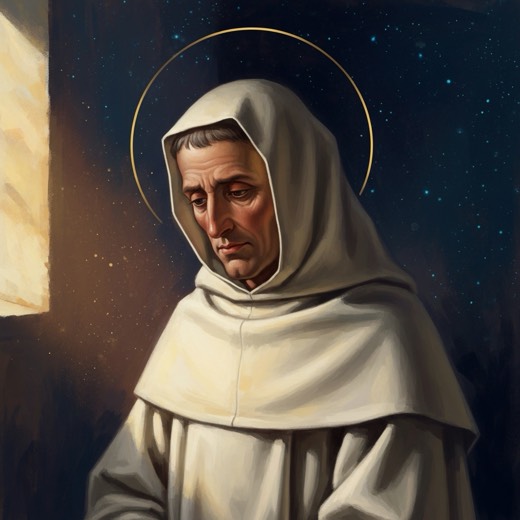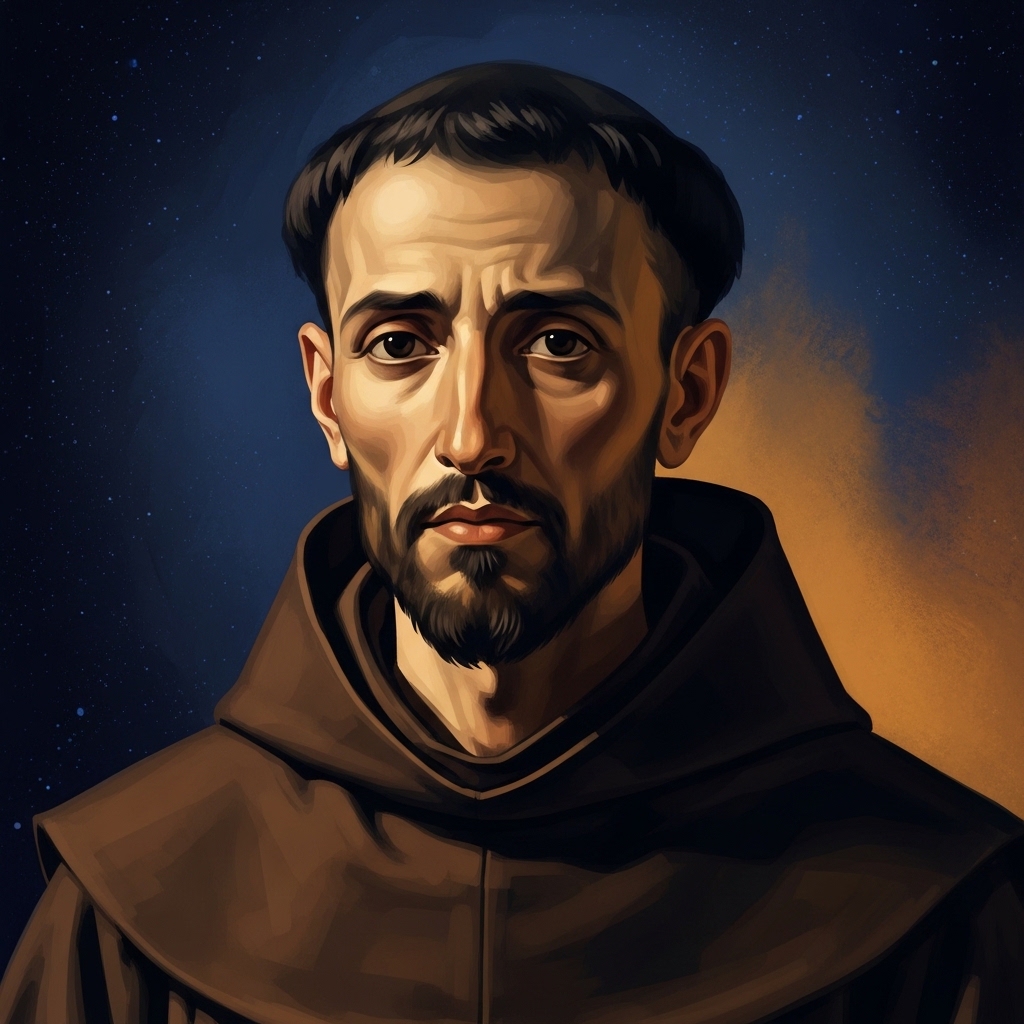
John of the Cross was a small man of immense interior intensity. Born in Castile to a poor family, he became a Carmelite friar in his teens, met Teresa of Avila in his twenties, and joined her in the project of reforming the Carmelite order along strictly contemplative lines. The reform brought conflict. In 1577 his Carmelite opponents kidnapped him and held him for nine months in a tiny cell in Toledo, where he was beaten weekly and given barely enough to live on. It was in this cell that he wrote the verses of the Spiritual Canticle.
His four major works, all written after his escape, form a single integrated map of the contemplative path: the Ascent of Mount Carmel, the Dark Night of the Soul, the Spiritual Canticle, and the Living Flame of Love. The Ascent and the Dark Night describe the systematic stripping required for union with God: first the senses, then the affections, then the most subtle attachments of the spirit itself. Each layer of identification has to fall.
His prose is austere and precise. His poetry, written in the same period, is among the greatest in Spanish literature. He died at forty-nine, exhausted by reform politics and asceticism. He is read across the Christian contemplative tradition and far beyond it, by Buddhists, Sufis, and Advaitins who recognise in his maps of the path their own.
The teaching
The phrase dark night of the soul has entered the language but is usually misunderstood. John does not mean depression or grief. He means a specific contemplative event in which God withdraws the felt supports of the spiritual life so that the soul’s dependence on them can die. And he divides the night in two.
The night of sense comes first and is, he says, common among those who practise seriously. The sweetness that carried a person into prayer dries up. Meditation that used to be easy becomes impossible. Nothing seems to happen, and the person concludes they are going backward. John gives diagnostic signs for telling this night from simple laxity or illness: the dryness extends to everything, not just prayer; there is real anxiety about failing God; and beneath the aridity sits a quiet, persistent inclination to remain alone in loving attention. Where these hold, the dryness is the beginning of contemplation, and the worst response is to force the old meditations back to life.
The night of spirit comes later, to few, and is severe. The purification reaches the soul’s deepest props: its sense of God’s favour, its self-image as a spiritual person, even faith and hope as felt experiences. John reads this darkness as an excess of light. The divine inflow is too direct for the soul’s faculties and registers as darkness, the way strong light blinds an unaccustomed eye.
Where to start
- The Dark Night of the Soul: hosted here in the David Lewis translation.
- Ascent of Mount Carmel: the companion work on the active side of the stripping, at the Christian Classics Ethereal Library.
- John of the Cross at CCEL: the wider catalogue, including the Spiritual Canticle and the Living Flame of Love.